Hello Intuit
The arc from a voice-first prototype to a company-wide AI platform — building the case that conversation could be Intuit’s next operating system.
Hello Intuit was an extension of the voice work I’d been brought in for — we built it the same week as Lead Lingo. Two of these in about seven days, which in retrospect was nuts.
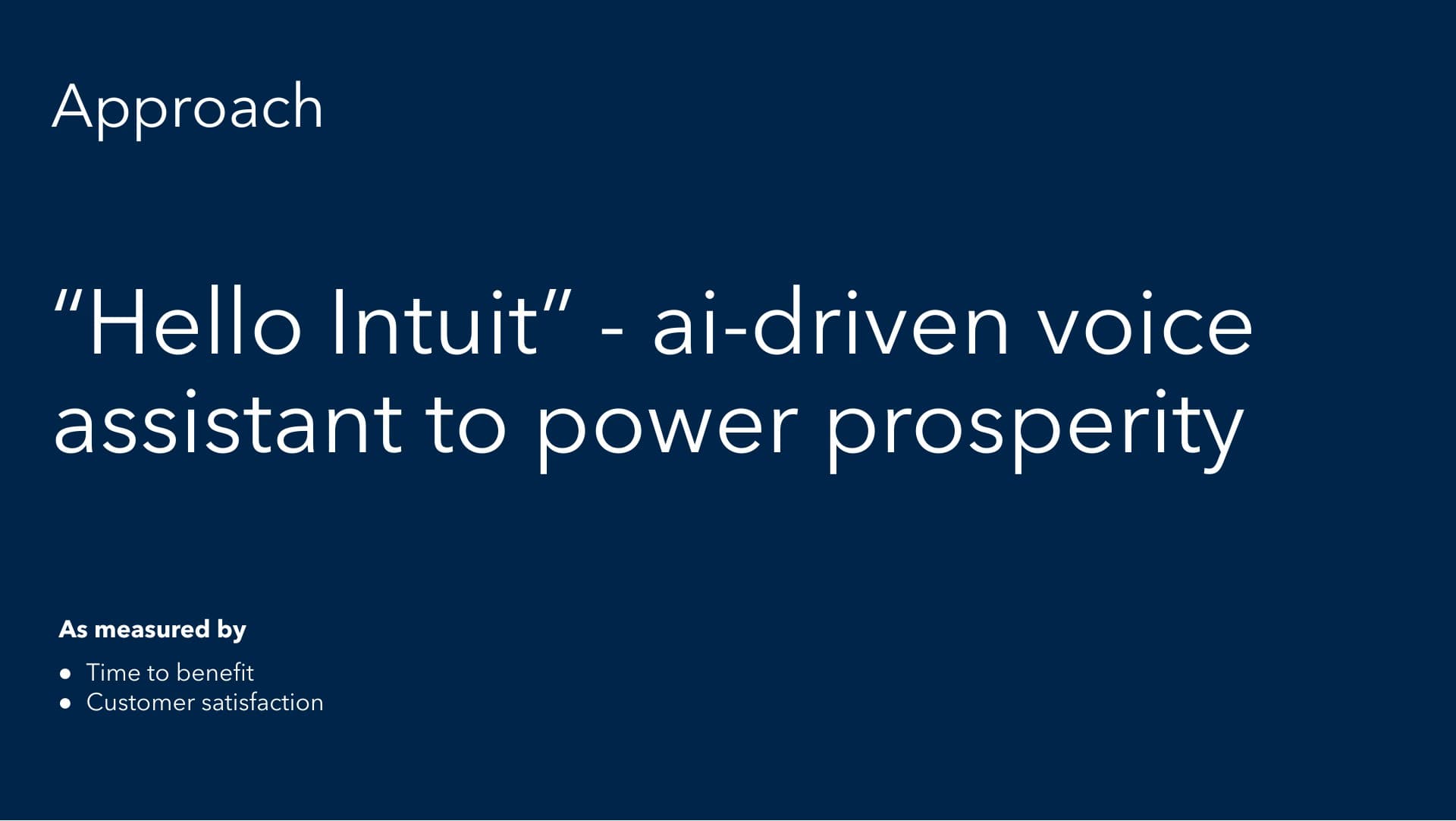
Lead Lingo connected a voice agent to backend tools. Hello Intuit asked a different question: what if voice didn’t just talk to the backend — what if it talked to the interface itself? Could we lay an additive conversational layer over the surface already in your hand? The phone becomes the vehicle. It follows you, stays with you, reaches out when it needs to. Less an app you open, more a kind of soul interface — something that lives next to you through the day.
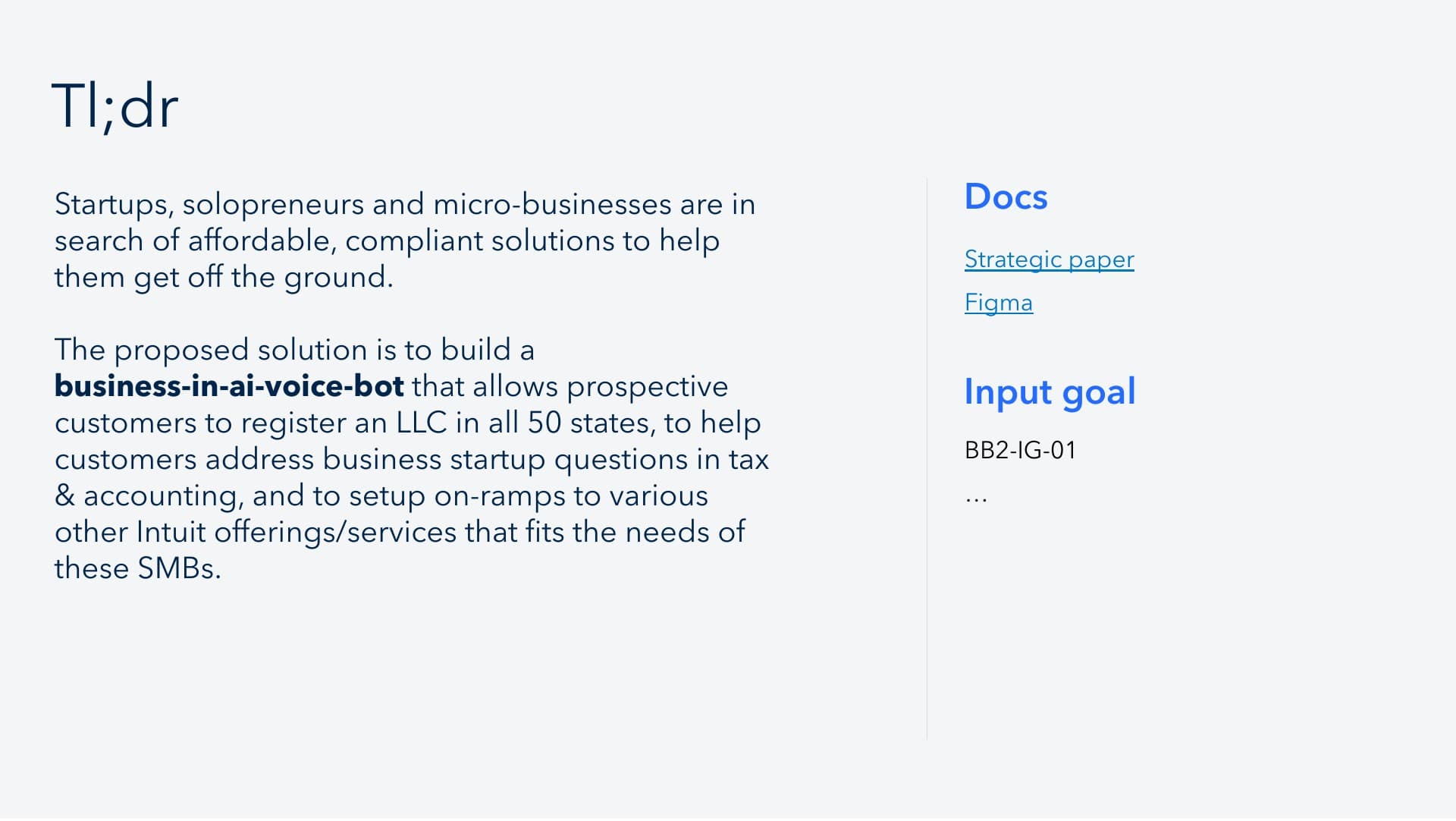
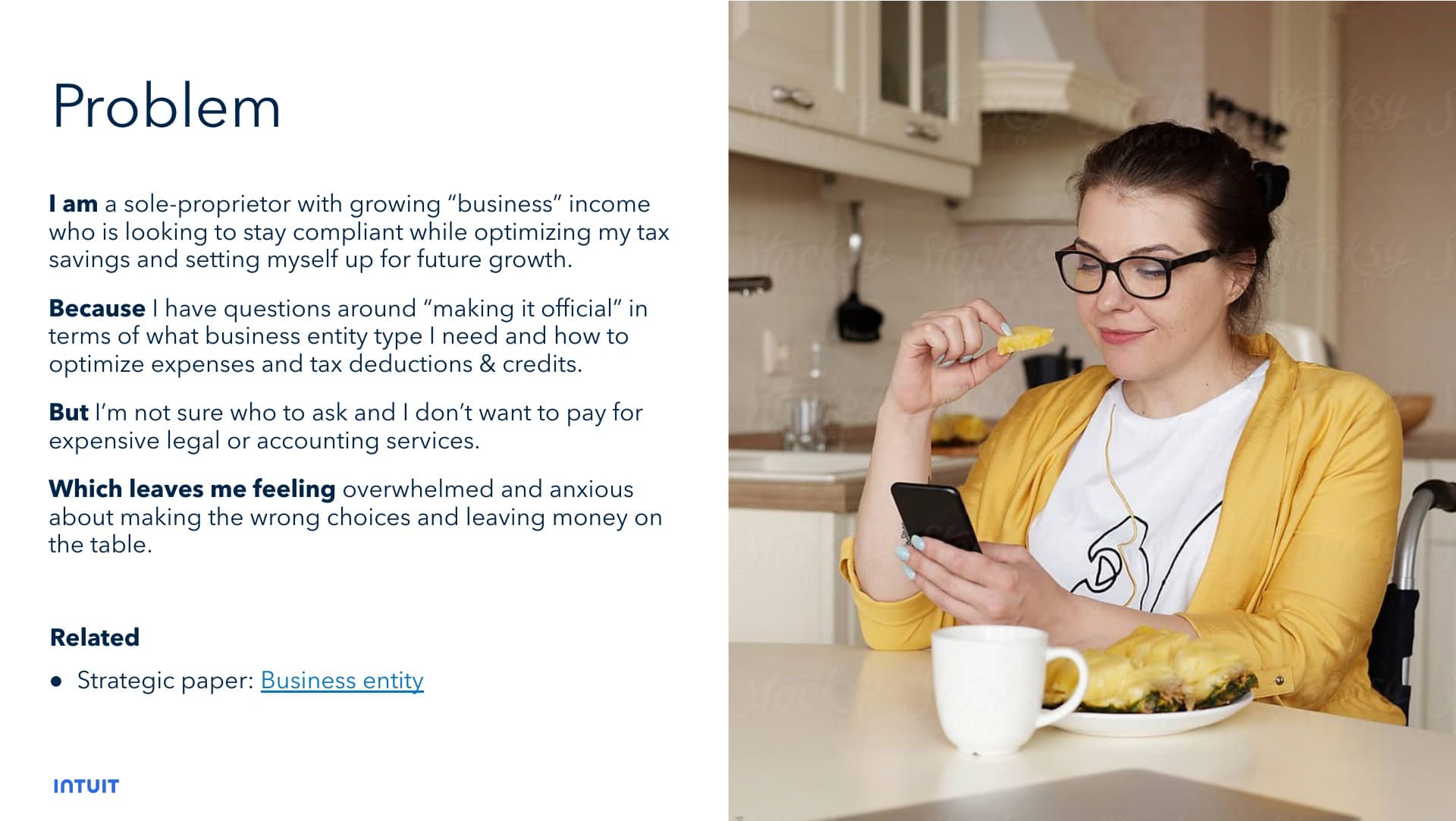
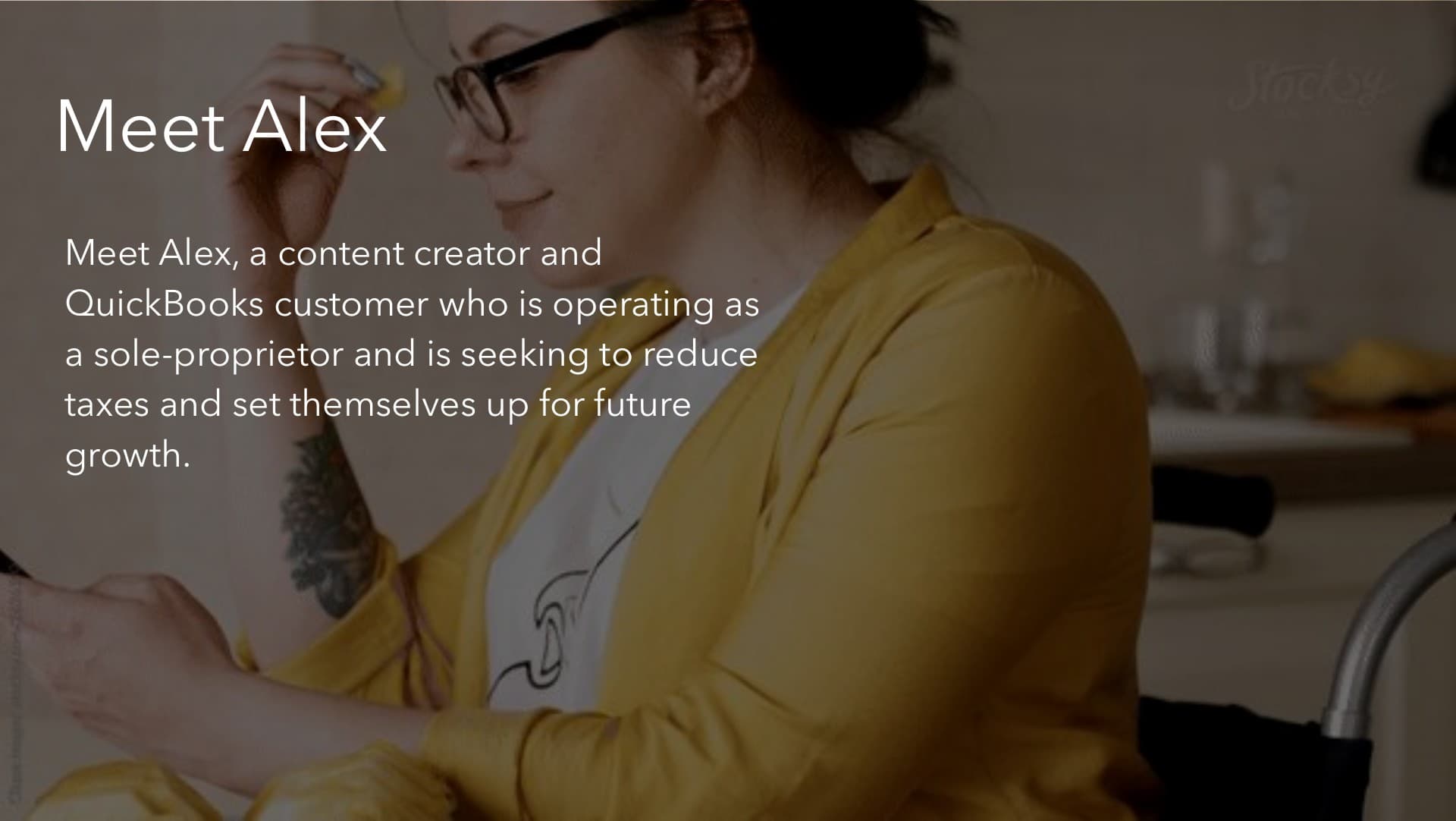
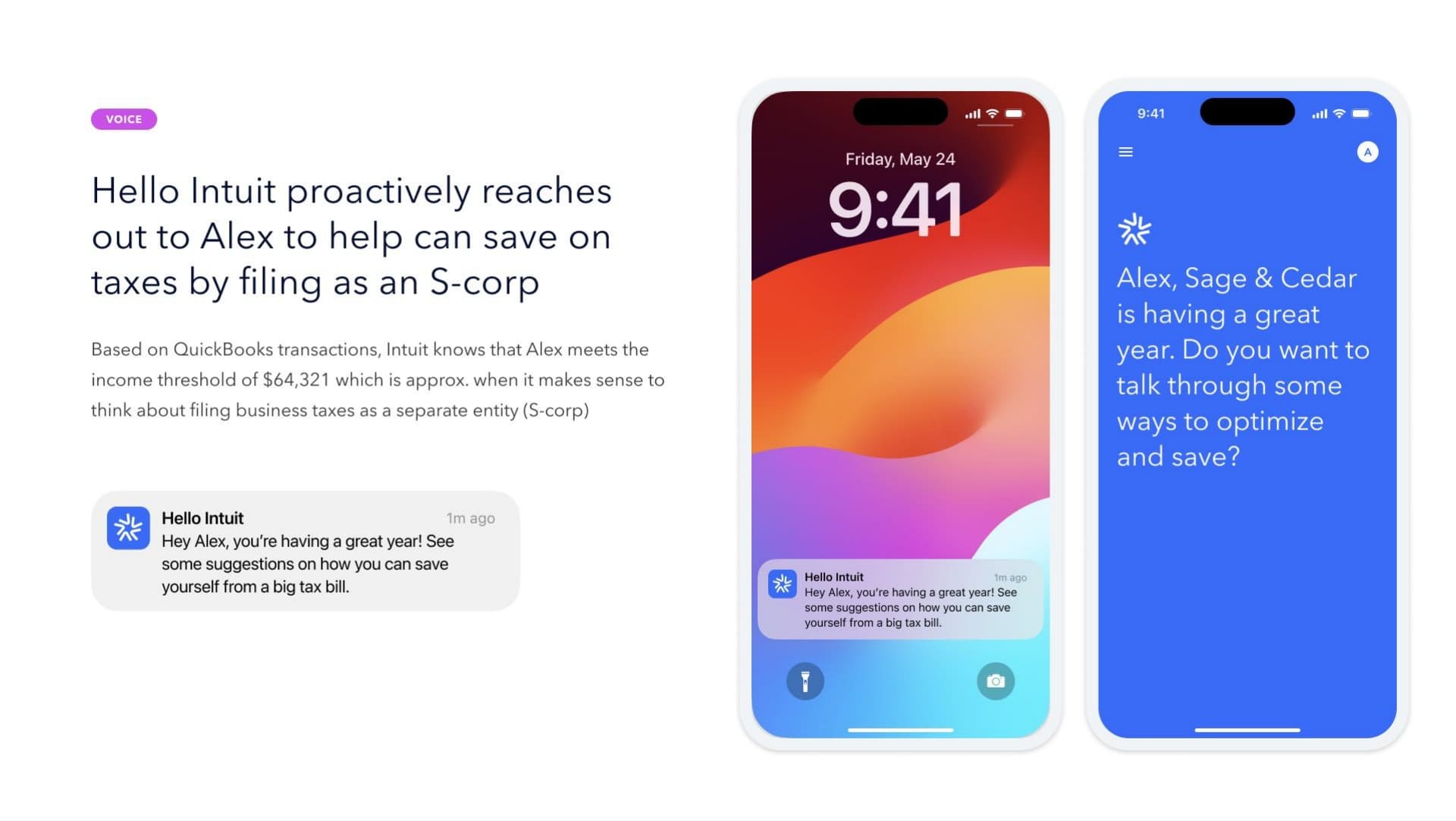
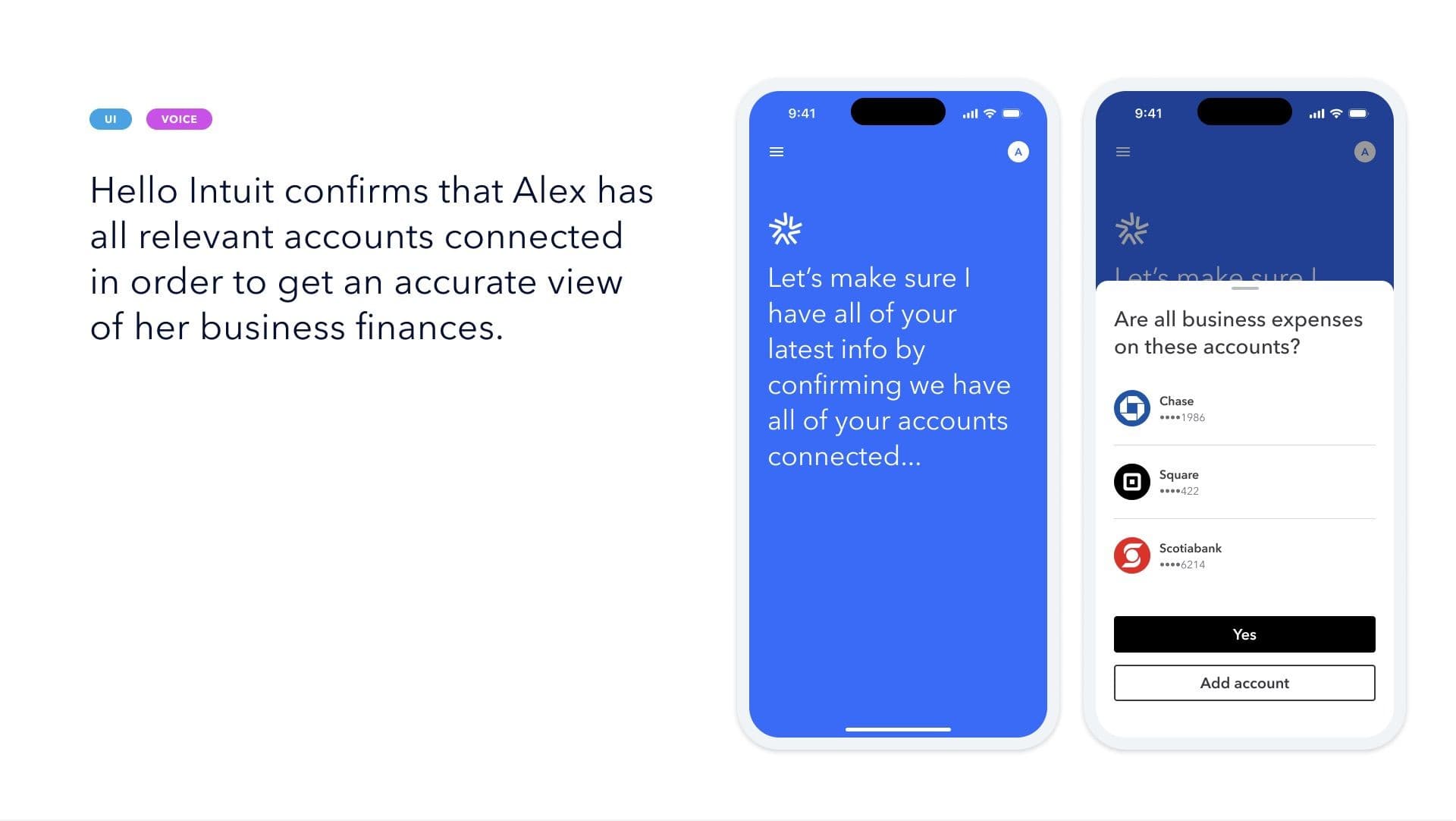
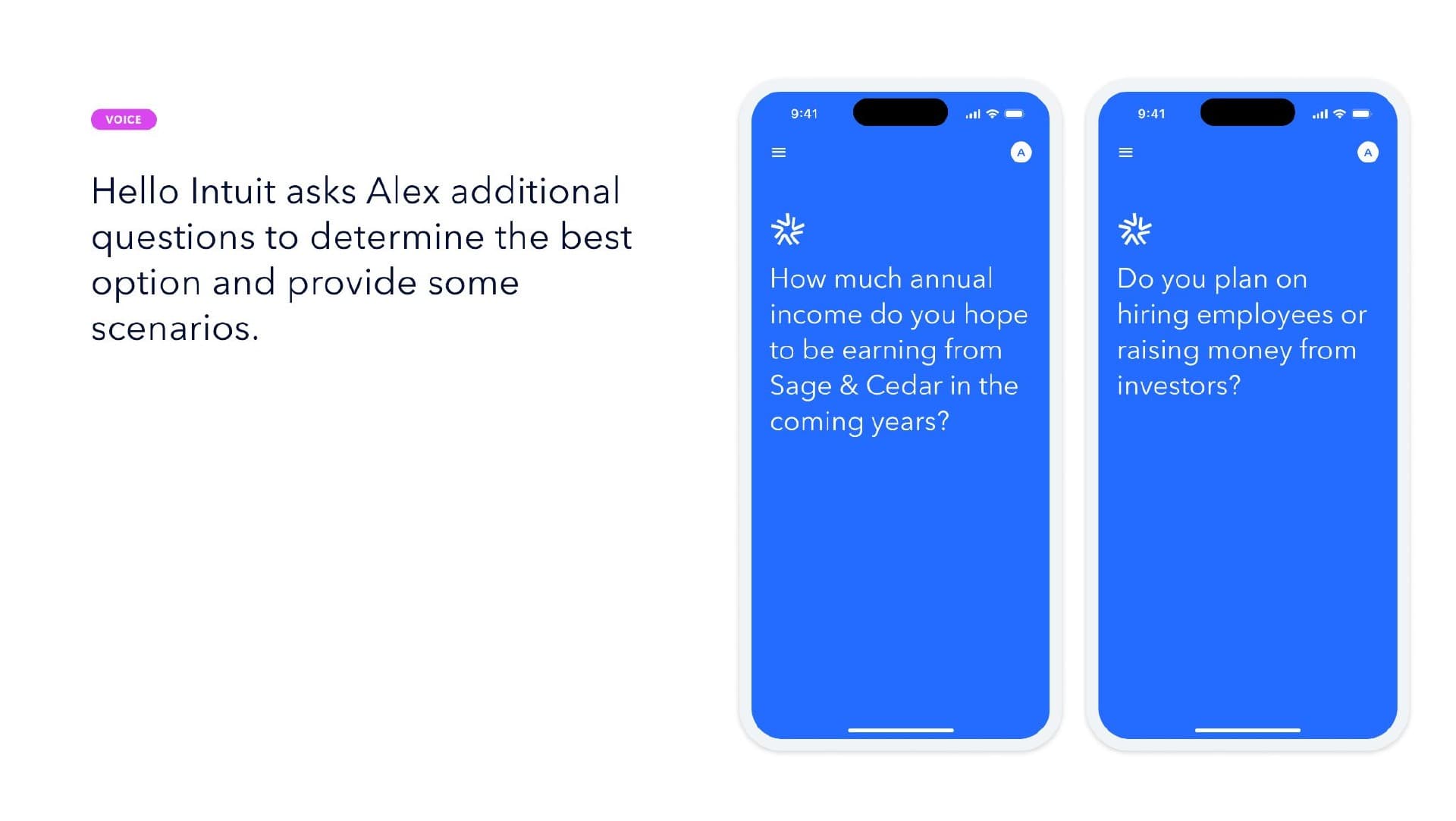
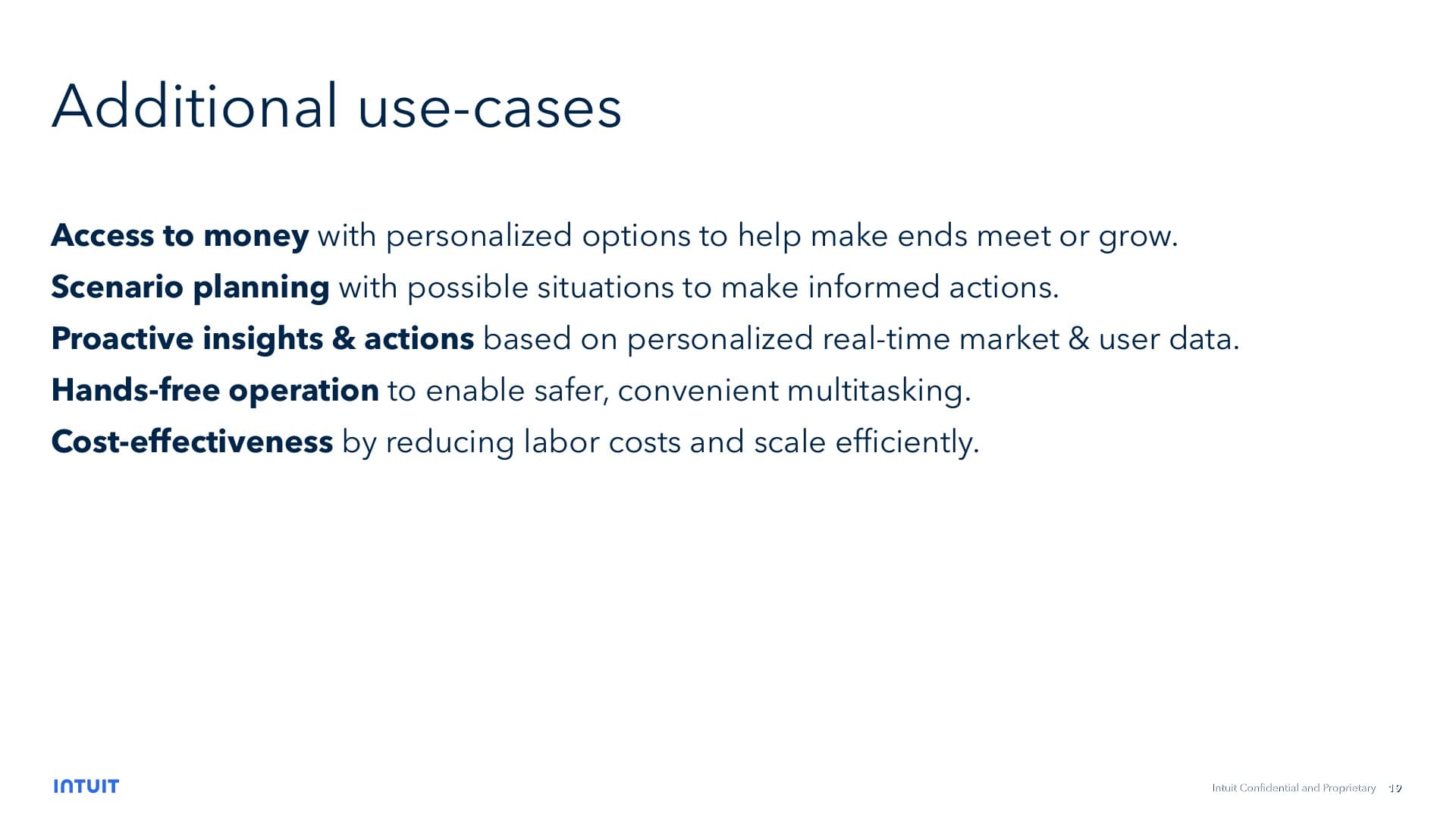
The working prototype followed Alex — a content creator filing as a sole proprietor, trying to reduce taxes and set up for growth. Hello Intuit recognized Alex’s QuickBooks data, recommended an S-corp conversion, walked through the filing steps, and jumpstarted the business tax return, all through natural conversation on the device she already carried. It wasn’t voice as novelty. It was voice as the layer that makes the whole surface feel awake.
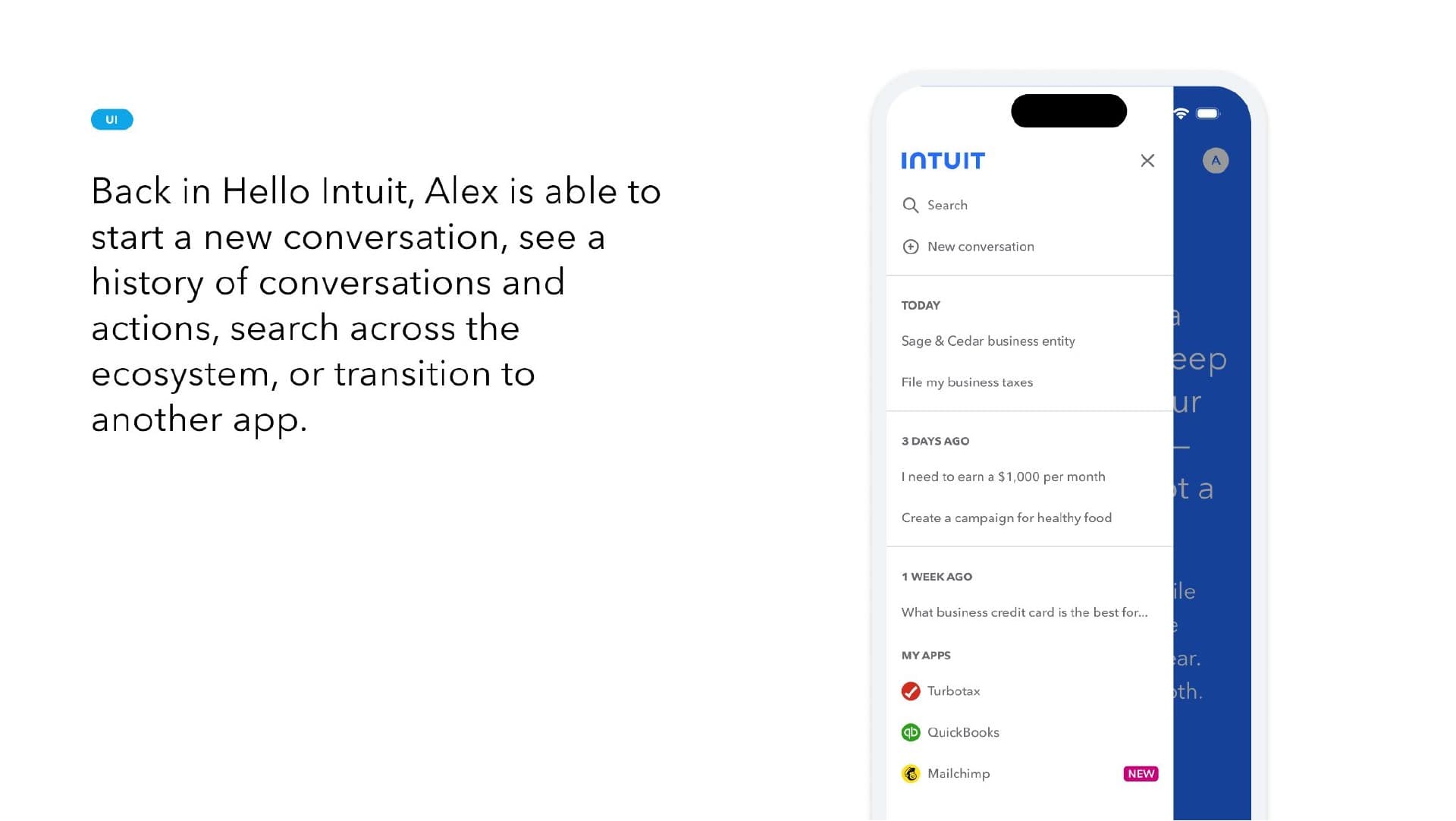
The prototype started as a thought experiment and evolved into something larger — a platform vision we called Intuit Intelligence. Agent-to-agent handoffs. A morning notebook that greets you with what actually matters. Small, hyper-personal touch points through the day that keep a business owner engaged without burning them out. The assistant doesn’t live inside a single product; it lives with you.
The thread underneath the whole thing: the best native AI won’t feel like software. It’ll feel familiar, and it’ll feel next to you.
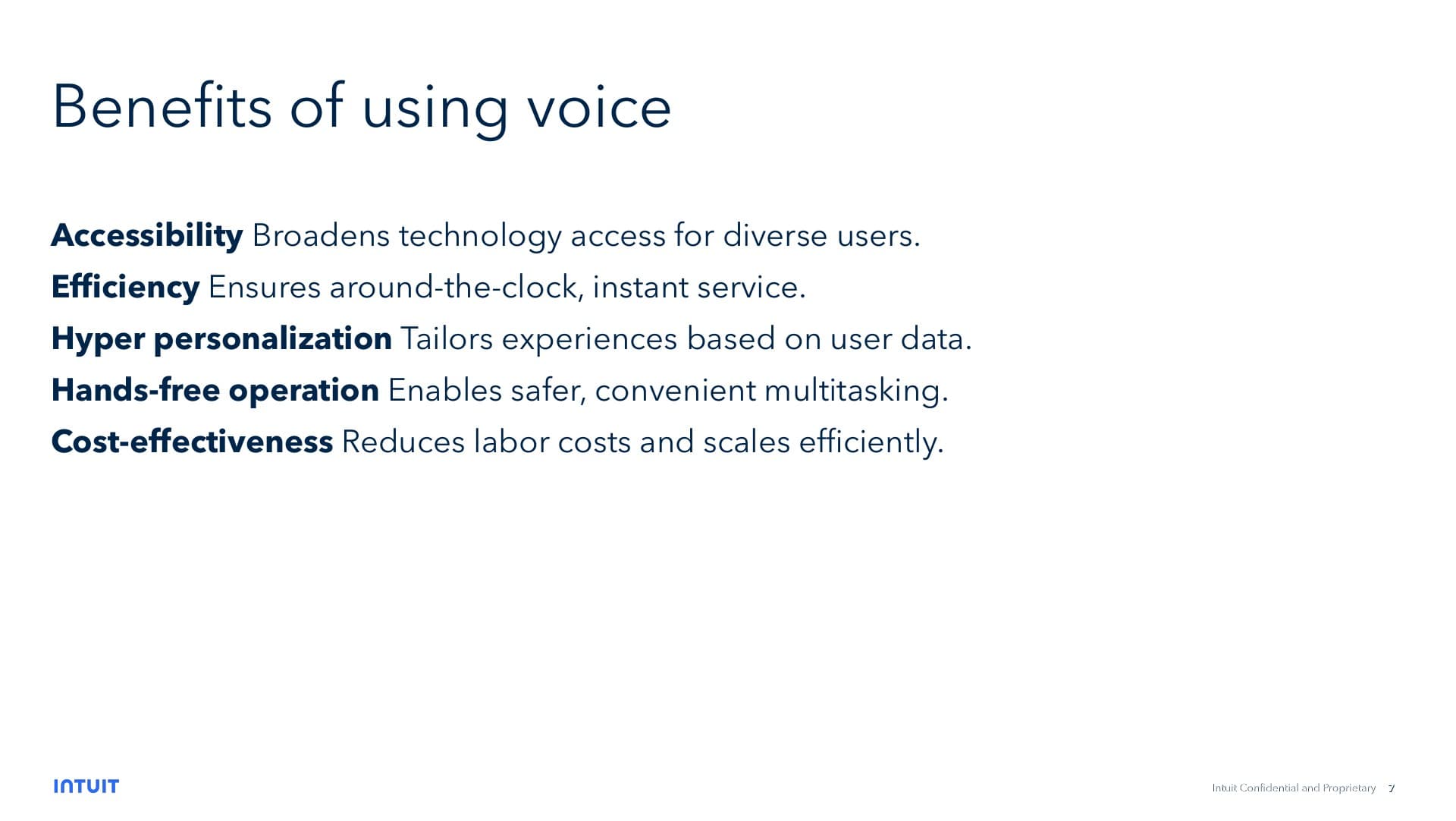
From there the idea evolved again — into a company-wide initiative called Omni, a chat-first interface in the shape that ChatGPT has now made legible to the world. Our argument was that voice sits on top as the additive modality layer: voice, text, notifications, the same mix of channels humans already use with each other. One intelligence, many ways in.
Most of this isn’t shipped yet. Internally, the argument over whether voice even belongs inside finance is still being had. This early prototype is part of what set the larger trajectory in motion — we walked it through leadership many, many times. A lot of it didn’t land. People don’t always see where conversation fits inside financial software, and if you don’t see how natural language connects to the evolution of interfaces, there’s only so far a demo can carry the conversation. At some point you stop arguing and go build the next thing.