Junk Drawer
A collection of things that should not exist but do. AI hallucinations, fish people, googly eyes on everything, office workers in horse masks, sandwich ontology, and the slow dissolution of Keith Haring into a neural network's fever dream. This is the drawer you open when you're looking for tape and find a portal instead.
Every studio has a junk drawer. The physical version holds dead batteries, mystery cables, a single earring, and a receipt from 2017. The digital version is worse. It holds the things you made at 2 AM when the prompt engine was hot and your judgment was not. The experiments that don't belong to any project. The images that made you laugh alone in a dark room. The fish person.
This page is that drawer, emptied onto the floor and arranged with as much care as you'd give to a crime scene evidence wall in a movie about a detective who is losing it. None of these pieces were made for clients. None of them solve problems. Several of them are problems. They exist because generative tools don't have taste, and sometimes that's exactly what you need.
The eyes came first. Before any of the AI experiments, before the fish, before any of it — there were just these two stupid perfect googly eyes staring at nothing. They became a recurring motif: pasted onto AI-generated crowds, hidden in brand presentations, dropped into Slack channels at inappropriate moments. If this collection has a mascot, it's these two idiots.
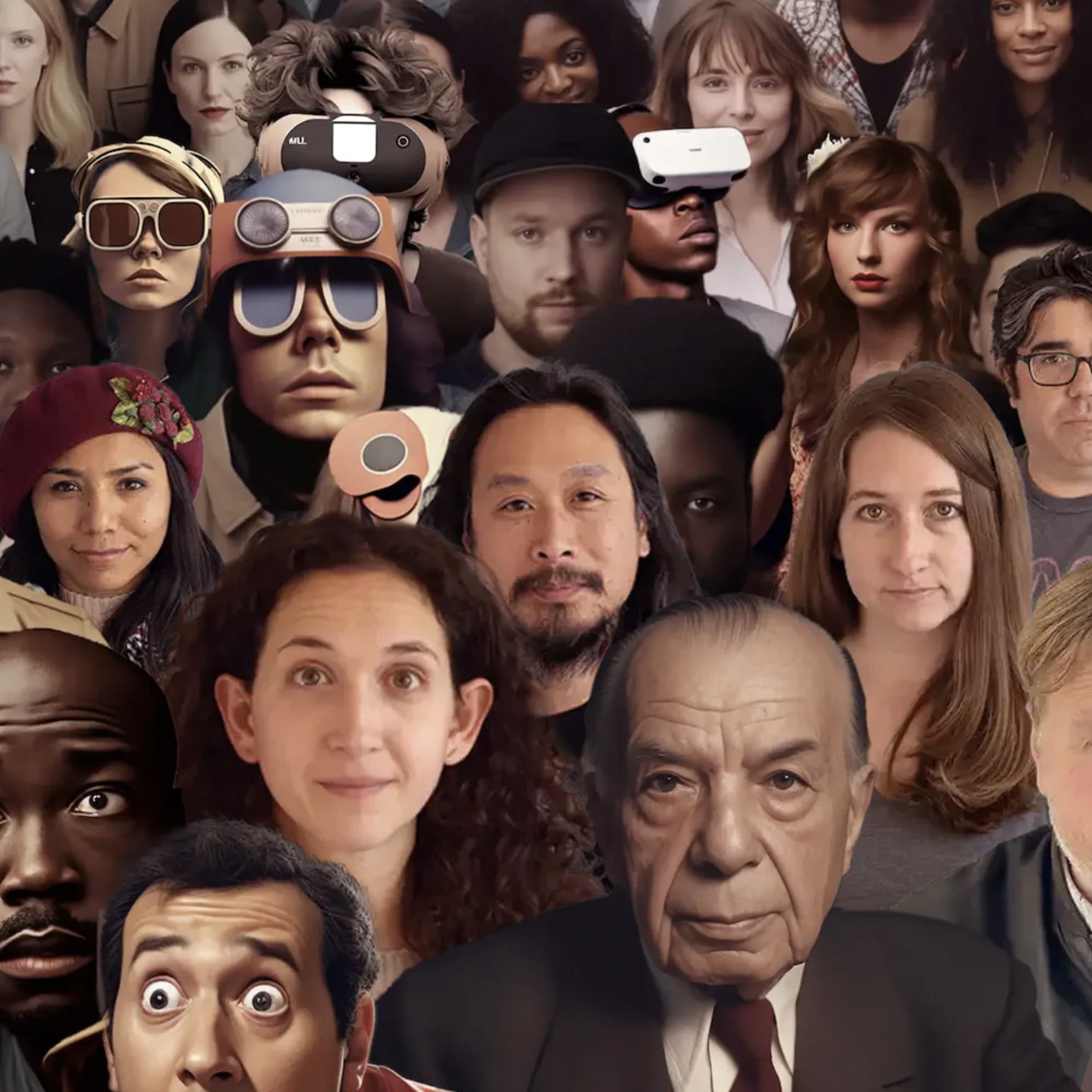
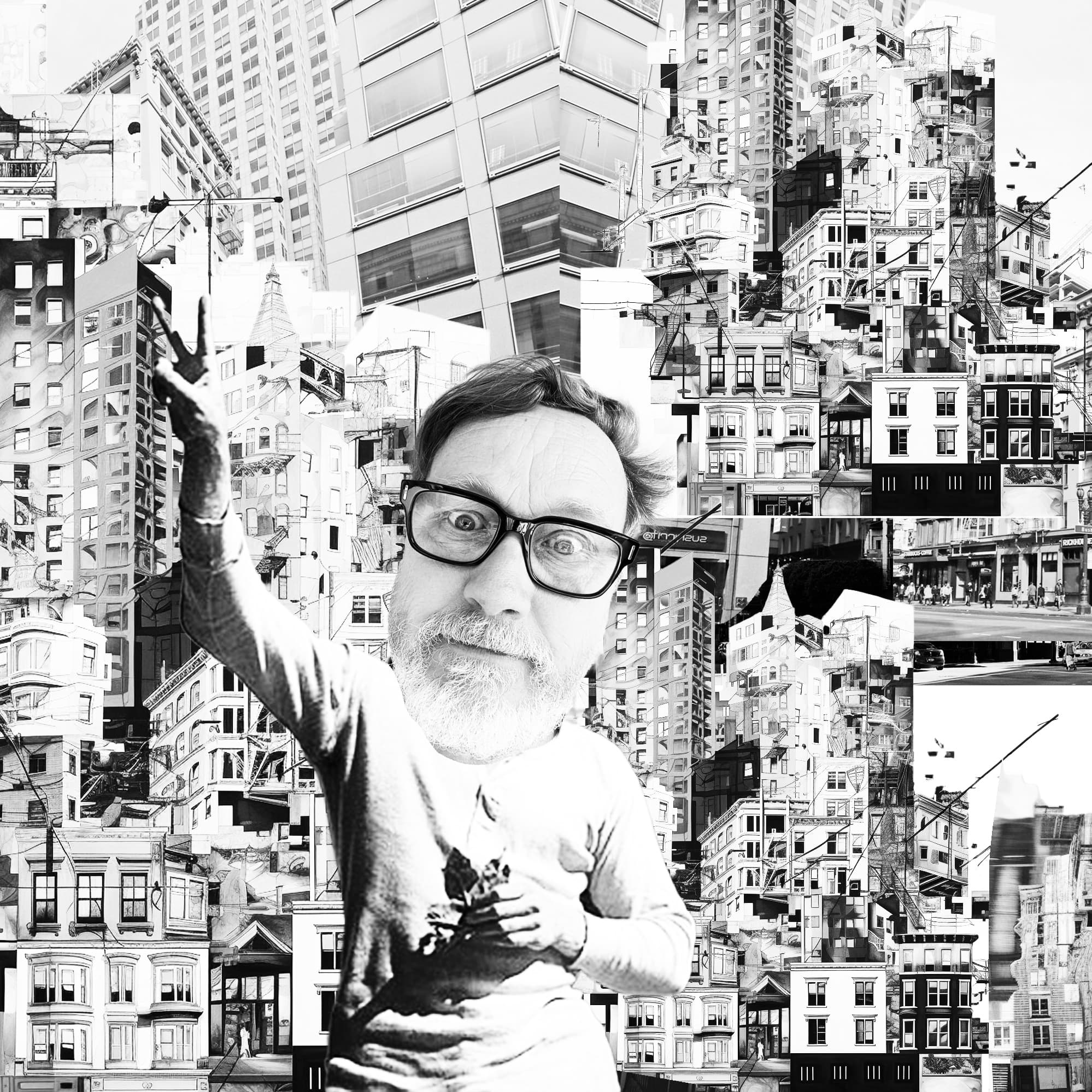
The self-portrait-as-cityscape was a quick Photoshop collage — San Francisco buildings growing out of a headshot like some Arcimboldo painting made of Victorians and fire escapes. The AI crowd came from prompting a diffusion model with increasingly contradictory instructions until it broke in interesting ways: VR goggles and googly eyes and rendered humans and cartoon characters all occupying the same uncanny valley group photo. It looks like the future feels.
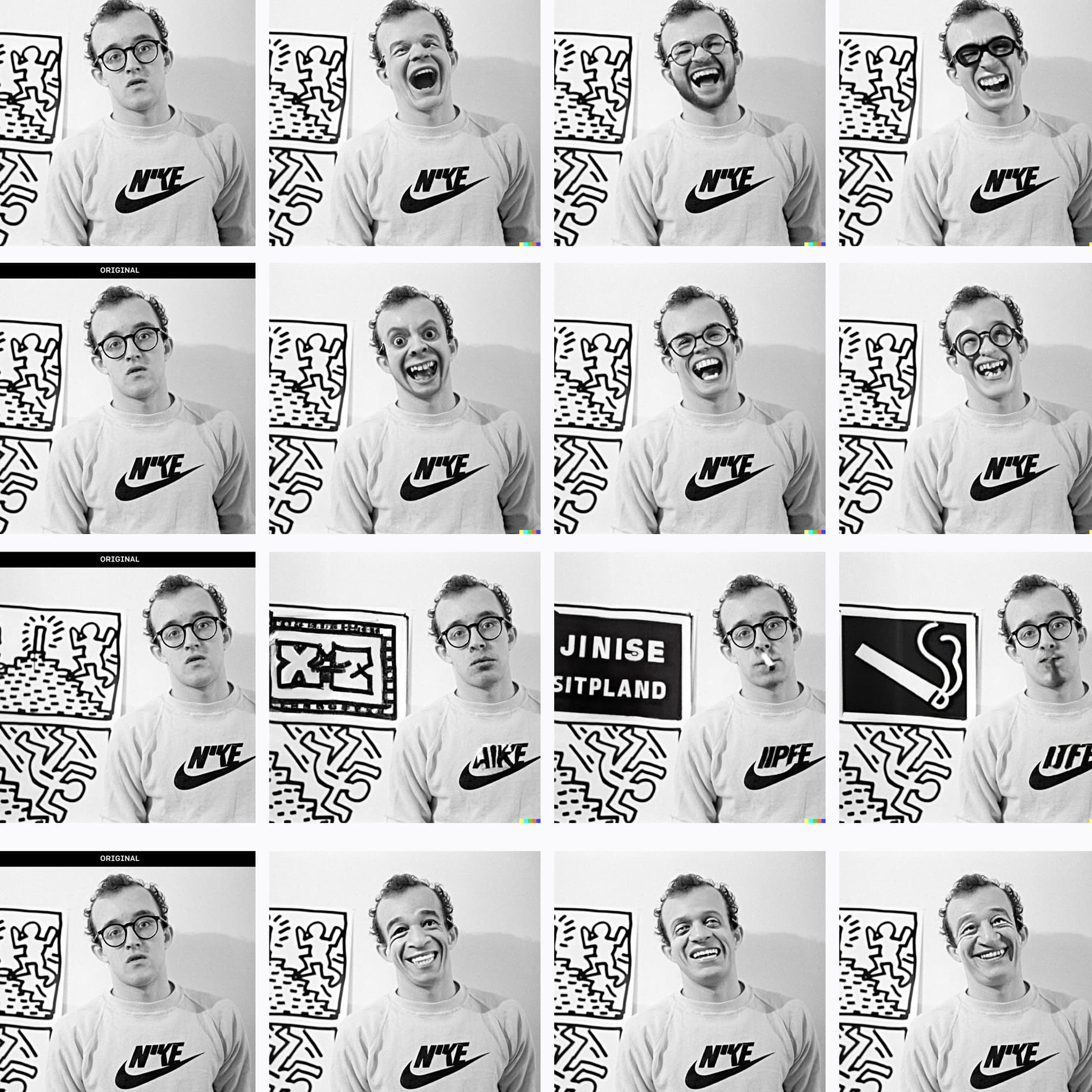
The Keith Haring grid started as a simple experiment: feed a photo of a man in a Nike shirt near a Haring piece into DALL-E's variation engine and keep going. Twenty iterations later, the person and the art have become indistinguishable. The Nike swoosh mutates into hieroglyphics. The face liquefies. The Haring patterns eat the photograph from the edges inward. It's a time-lapse of a neural network digesting an image — identity as lossy compression.
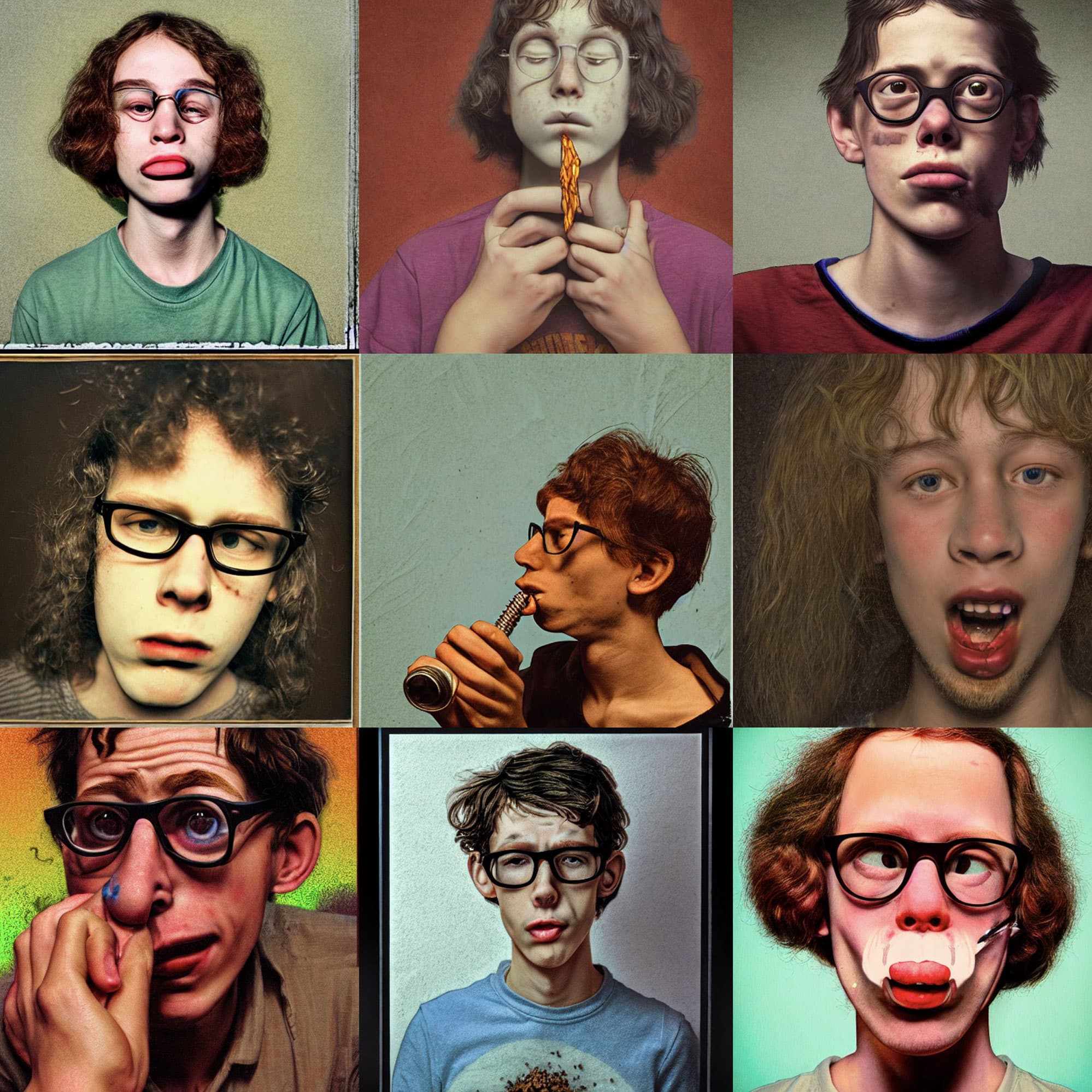
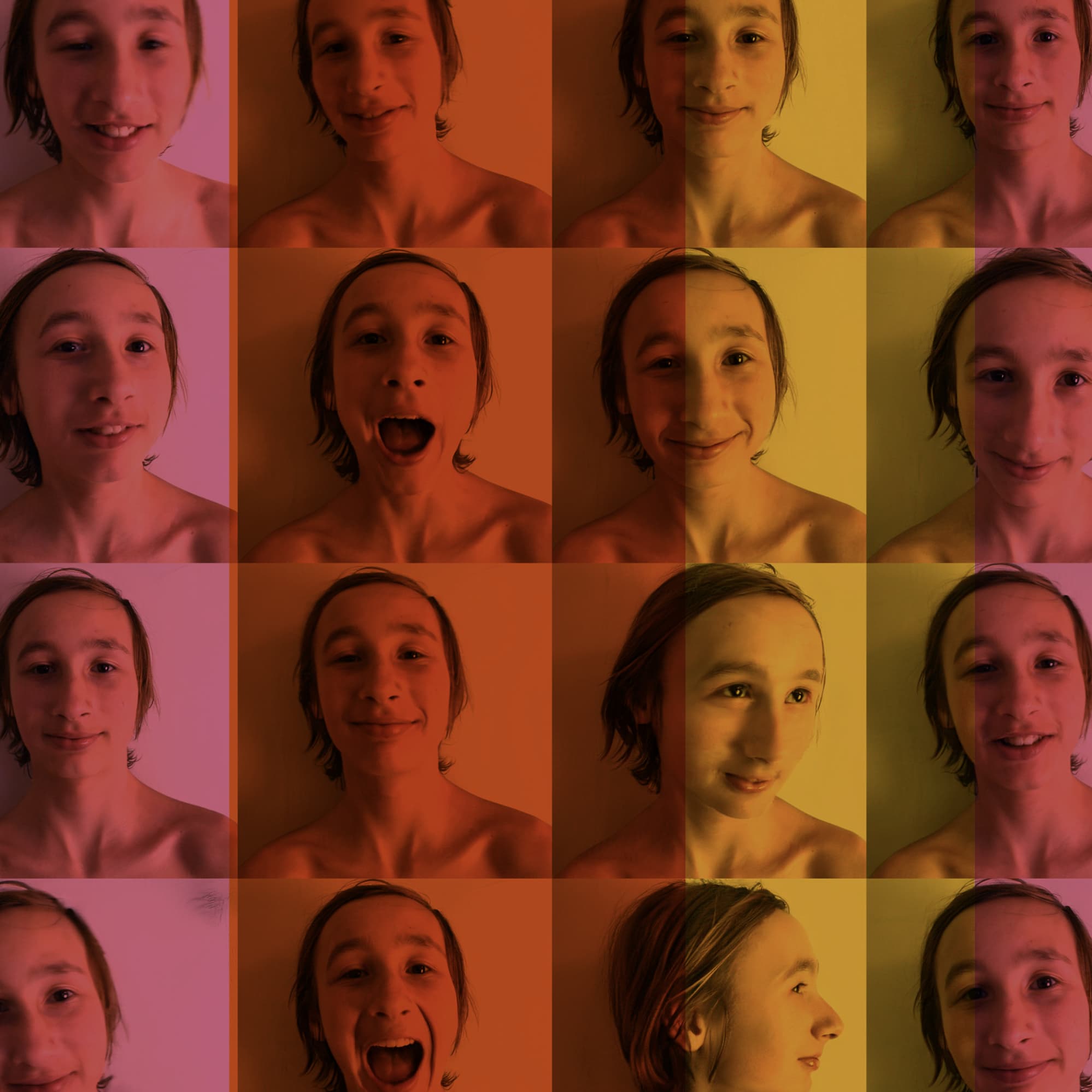
The uncanny yearbook portraits were a prompt injection experiment — asking for 'school photos from a dimension where puberty works slightly differently.' The color grid of faces is real photography run through a Warhol-izer that shouldn't exist. Both series explore the same territory: what happens when you point generative tools at the most emotionally loaded images we have (kids, portraits, identity documents) and let them get it almost right. The 'almost' is where all the interesting stuff lives.
Fish Person at Party — AI-Generated Character Animation
And then there's the fish. The fish person showed up uninvited during a Midjourney session — a human-piscine hybrid in an orange cardigan attending what appears to be a 1970s cocktail party, looking deeply uncomfortable about the whole arrangement. Something about the expression — the monocled eye, the pursed fish-lips, the formal attire stretched over scales — was so profoundly correct that it became an obsession. The still image led to animation experiments: gentle AI-interpolated morphing that gives the fish person the unsettling quality of breathing, of being almost alive, of being at a party where they know absolutely no one and are handling it with tremendous dignity.
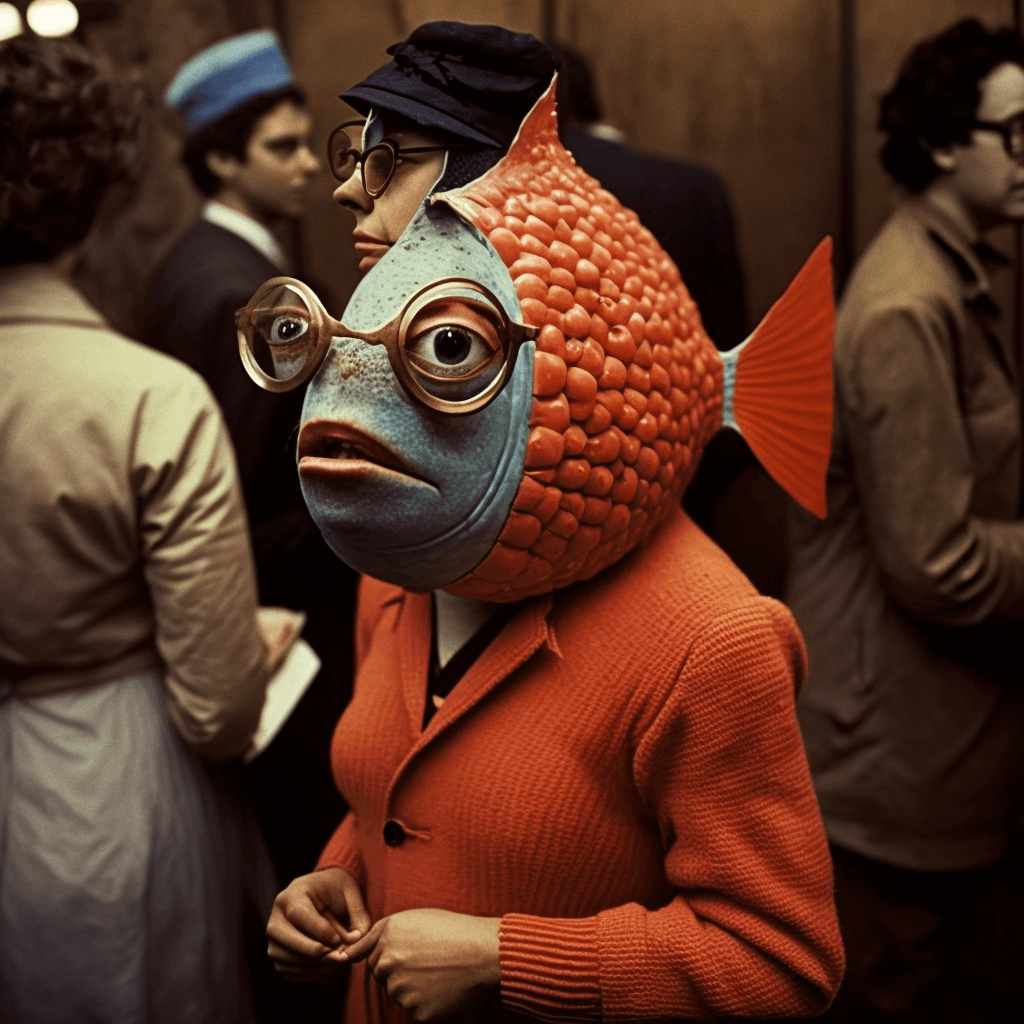
Fish Person — Short Loop
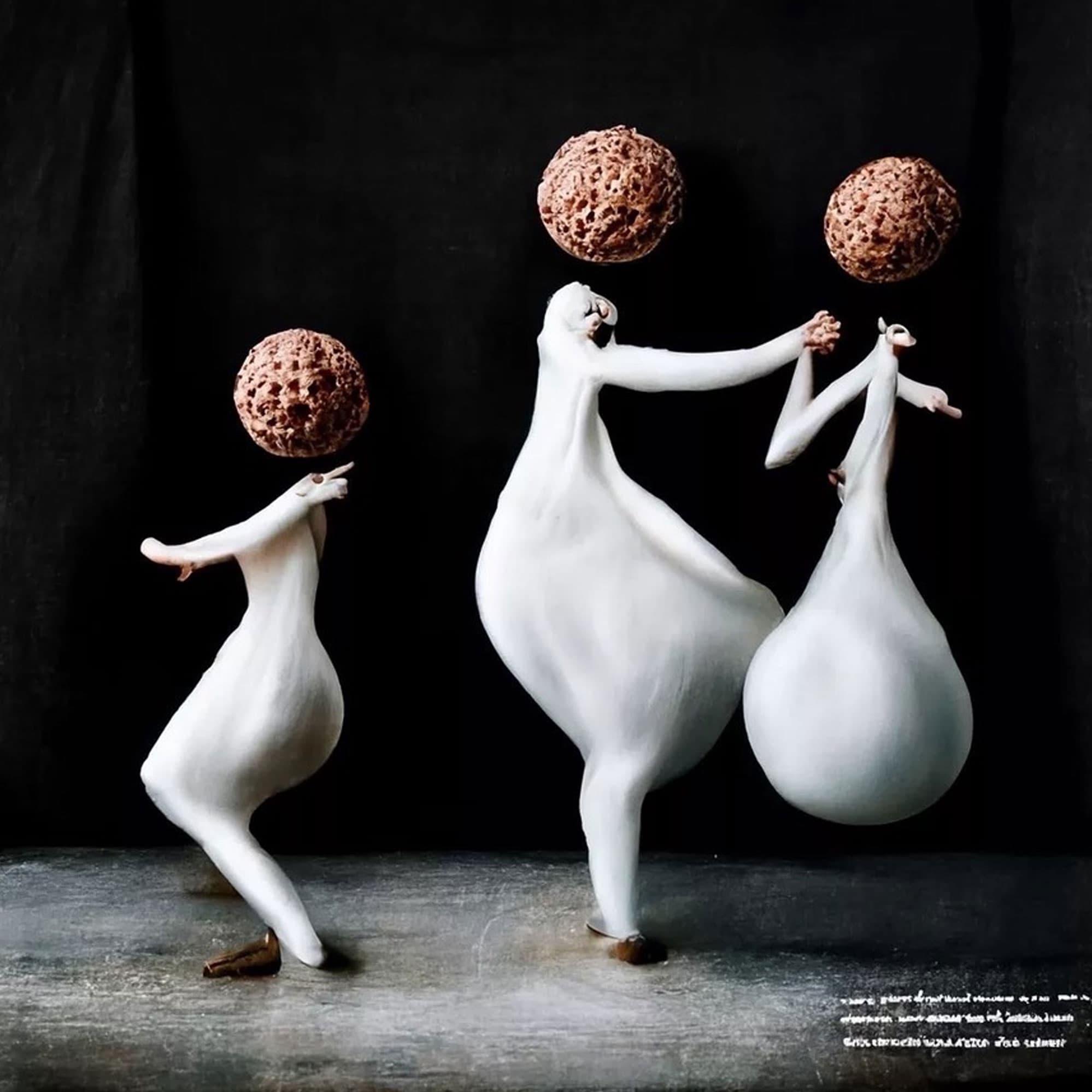
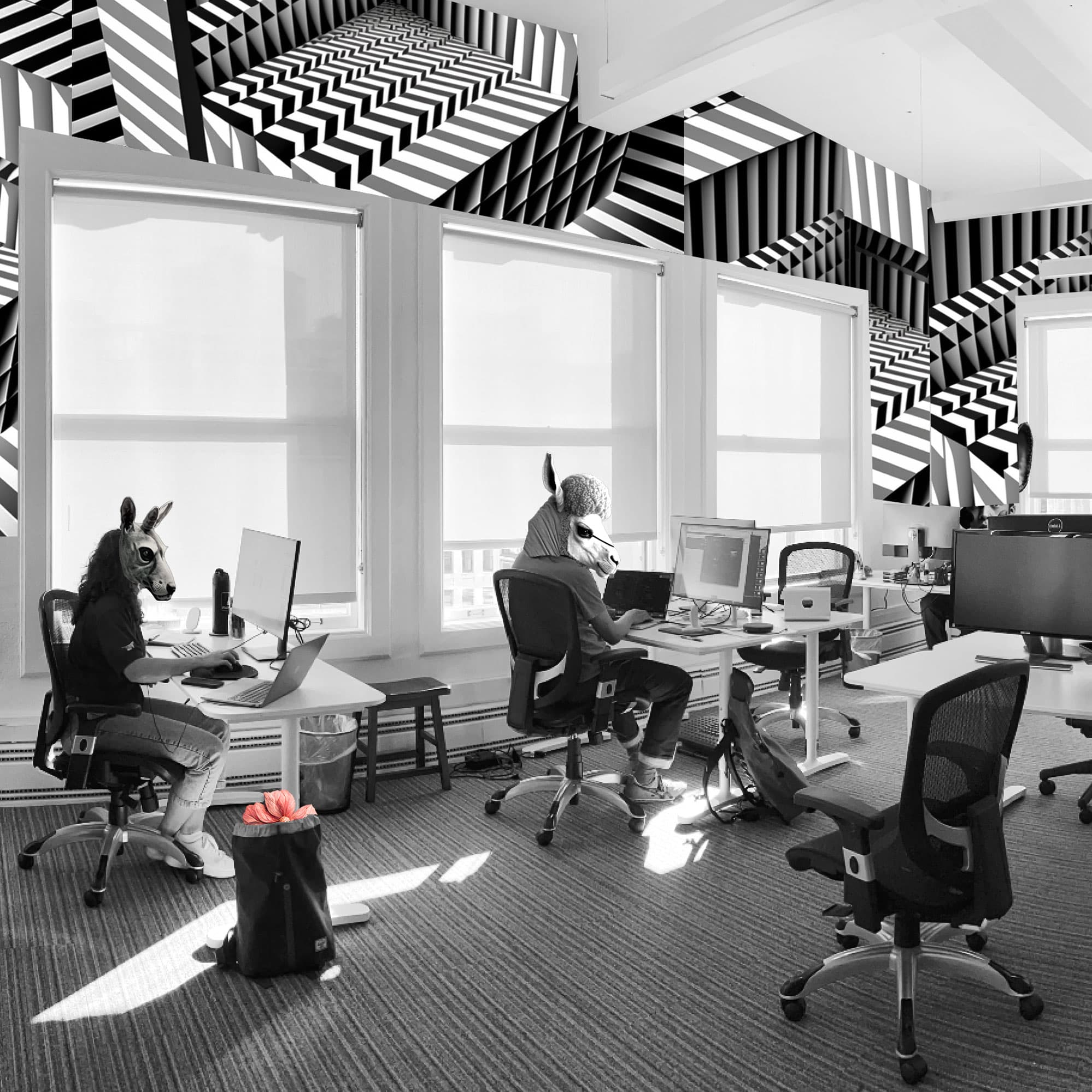
The dancing brain-figures and the horse-mask office workers share a lineage: both emerged from prompting for 'the workplace but wrong.' The brain dancers have the quality of a Hieronymus Bosch panel reimagined by a ceramicist on mushrooms. The horse-masked office is somehow more unsettling for being more realistic — real desks, real monitors, real dazzle-camouflage op-art ceiling, completely fake heads. It's a photograph of a place that doesn't exist but absolutely should.
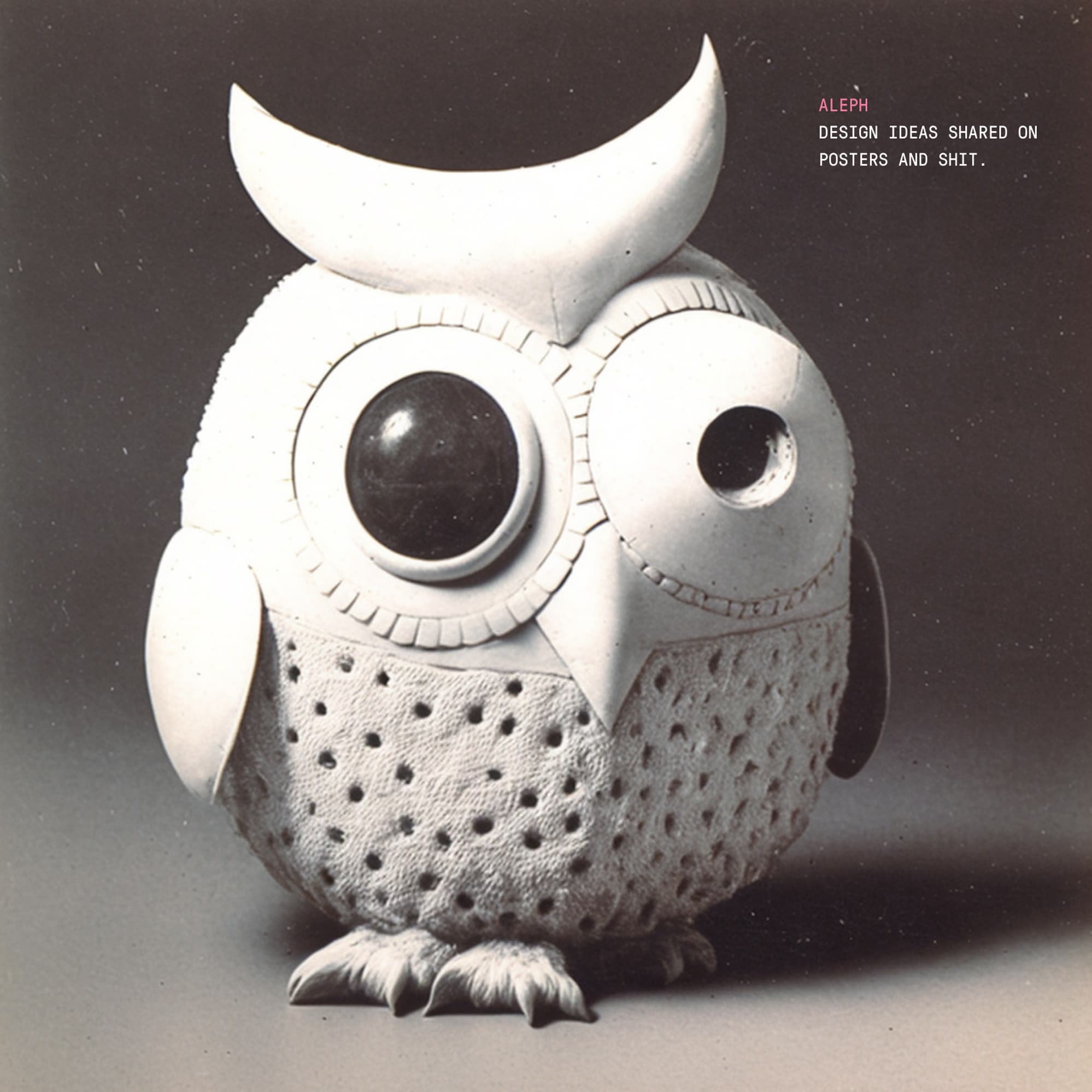
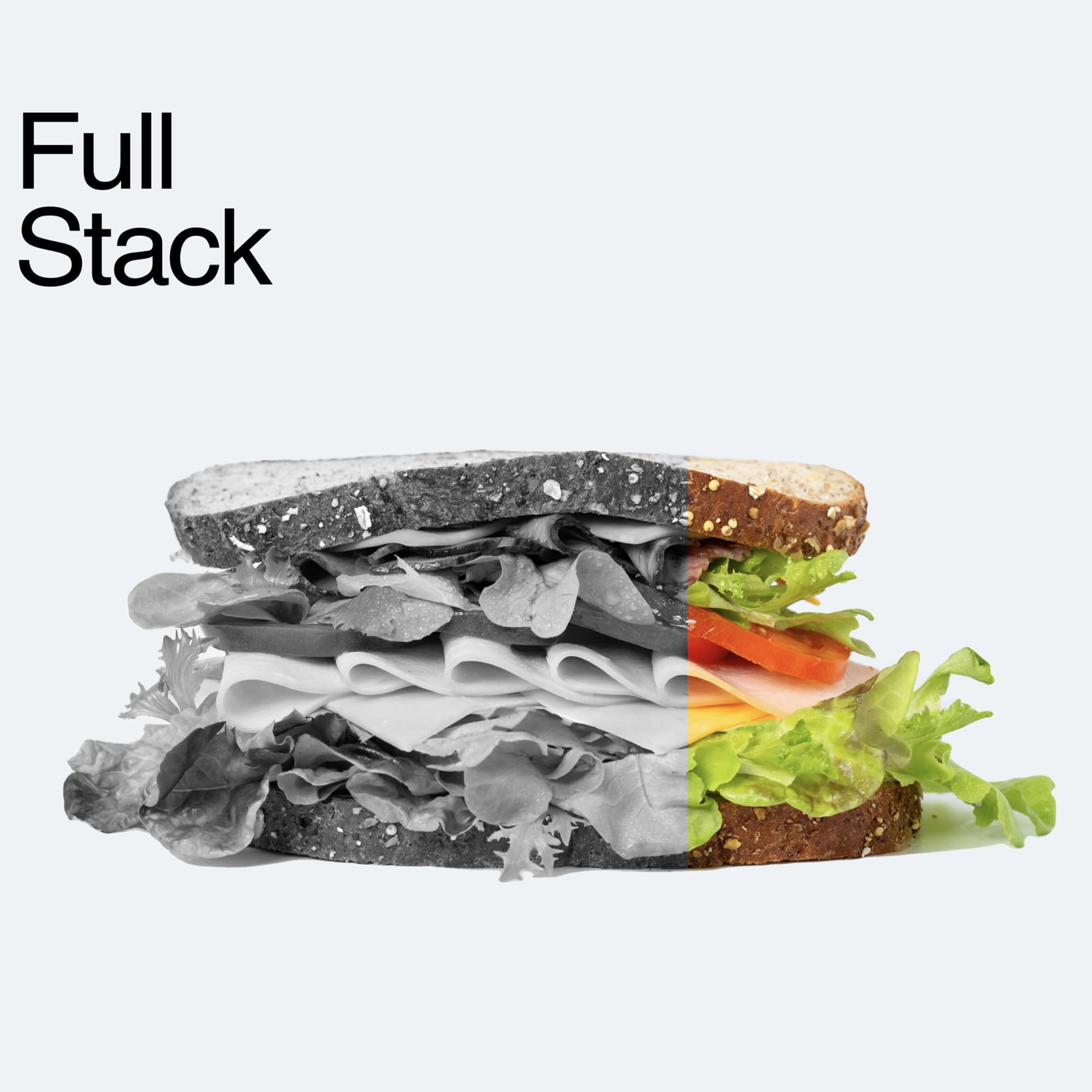
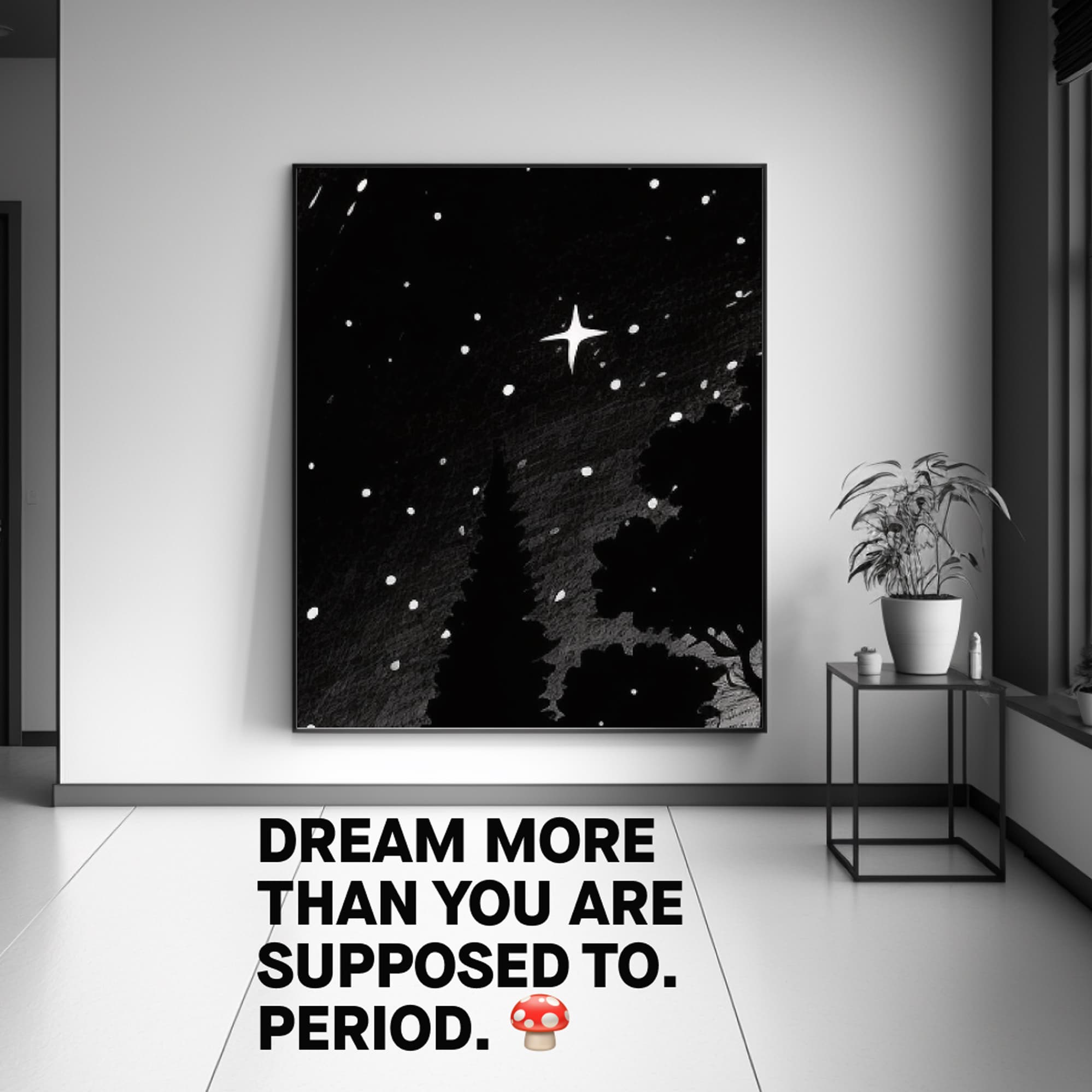
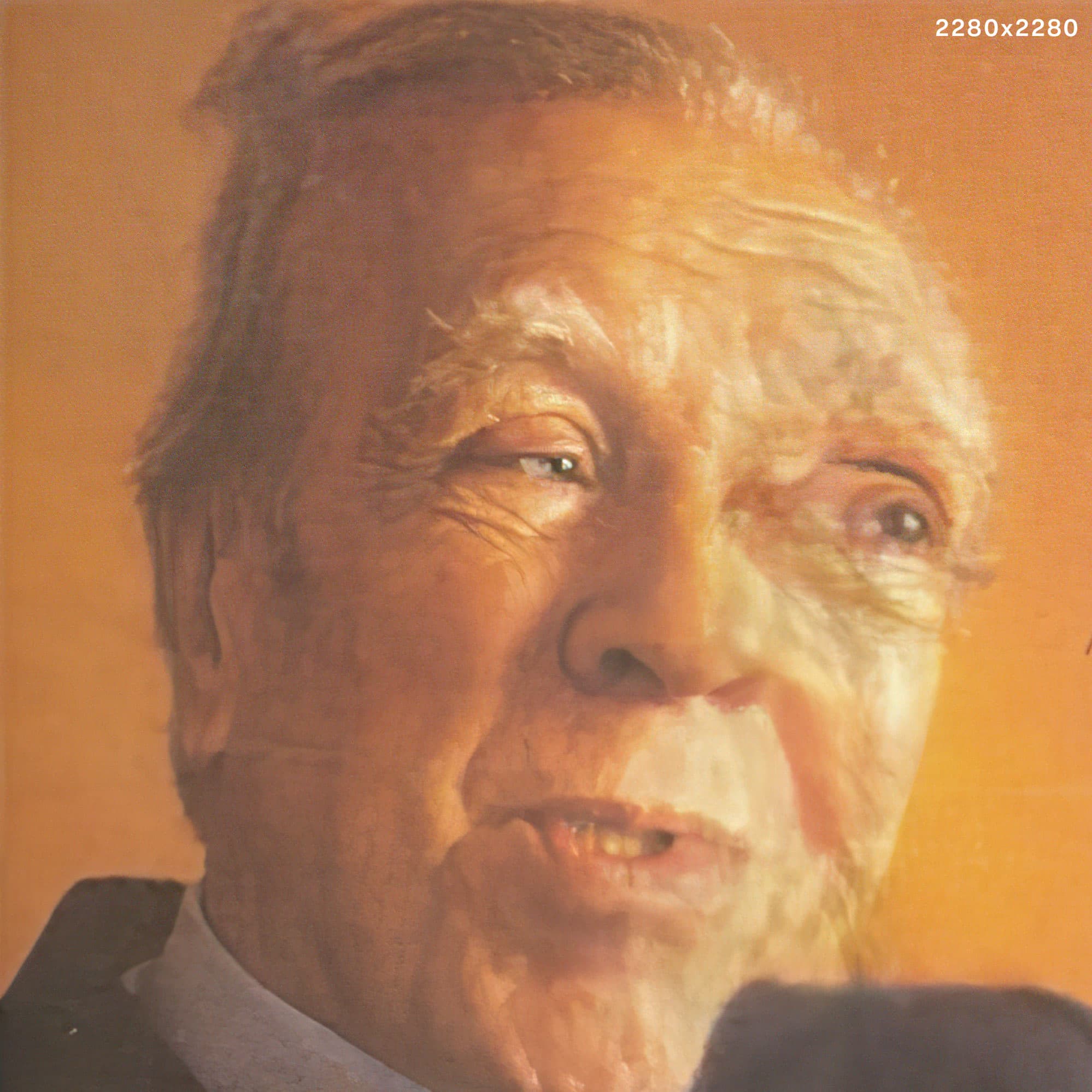
The owl knows something we don't. The sandwich is the only honest representation of 'full stack' ever committed to pixels. The gallery mockup is motivational art for people who find motivational art suspicious. The dissolving elder portrait is what happens when you upscale a low-res face and the AI fills in details that aren't there — inventing wrinkles, inventing light, inventing a person who never existed but who looks like they've seen everything.
None of this is portfolio work. None of it ships. All of it matters in the way that stretching matters before you run, or that doodling matters during a long meeting — it keeps the hand moving and the eye weird. The junk drawer stays open.